
RCS Advertising in France: Interactive Formats, Personalisation and Key Differences from SMS
Rich Communication Services (RCS) is changing how French businesses communicate with customers through mobile messaging. Unlike conventional SMS, RCS advertising can combine branded sender profiles, product images, interactive buttons, personalised offers and direct customer responses within a phone’s messaging application. In 2026, these capabilities are becoming increasingly relevant as businesses look for more engaging ways to reach consumers without requiring them to install another app. However, RCS is not a universal replacement for SMS: availability depends on compatible devices, mobile networks and messaging services. For companies operating in France, understanding these differences, the rules governing electronic marketing and the practical costs of implementation is essential before launching a campaign.
How RCS Advertising Works in the French Mobile Market
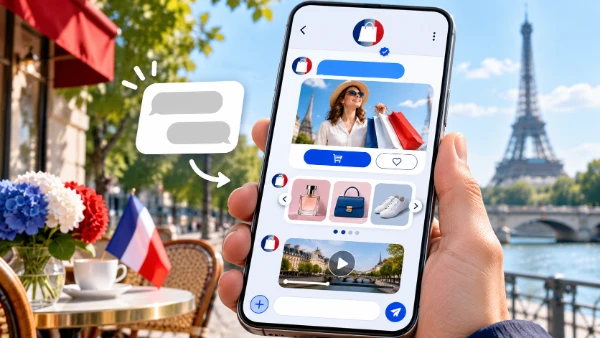
RCS is a mobile messaging standard designed to offer capabilities beyond traditional text messaging. For commercial communications, businesses can use RCS for Business to send promotional content through supported messaging applications, including Google Messages and Apple’s Messages app where the relevant services are available. A promotional message can display a company’s name, logo and brand information rather than relying solely on a telephone number or short sender name. Customers can view offers, interact with predefined response buttons and follow links to product pages without switching between several messages. Unlike SMS, RCS normally uses an internet connection, whether through mobile data or Wi-Fi, to deliver its richer content.
France is an important market for this development because mobile messaging habits are changing. According to Arcep, the French telecommunications regulator, the number of SMS messages sent declined by 25% year on year during the second quarter of 2026. The average mobile customer sent approximately 50 SMS messages per month, compared with 68 one year earlier and a peak of around 250 per month in 2016. Arcep identifies the growing use of instant messaging services and RCS among the factors behind this decline. These figures do not mean that commercial SMS has become ineffective, but they show why businesses are reassessing how conventional text campaigns fit into their wider customer communication strategies.
RCS availability in France must be assessed at the level of individual recipients rather than assumed from smartphone ownership alone. Apple introduced RCS support with iOS 18, subject to operator compatibility, while Android users can access the service through supported messaging applications and networks. Business messaging availability may also differ from ordinary person-to-person RCS communication. Before sending a campaign, an RCS provider can check whether a telephone number is reachable and which interactive functions its device supports. Where RCS cannot be used, an appropriately configured SMS fallback provides an alternative, helping advertisers maintain coverage without assuming every customer can receive the same message format.
Interactive RCS Formats and Practical Advertising Applications
One of the most useful RCS advertising formats is the rich card, which brings together visual content, descriptive text and a clear action within a single message. A French fashion retailer, for example, could present an image of a winter coat alongside its price, available sizes and a button directing customers to the relevant product page. Rich cards can also include video or animated images where supported. Google additionally allows businesses to create carousels containing up to ten cards, making it possible to present several products or service options in one conversation. This arrangement is particularly suitable for seasonal collections, travel packages and product comparisons, although the display should always be tested on the intended devices.
Interactive buttons reduce the number of steps separating an advertisement from the customer’s next action. A restaurant chain could send a lunchtime offer with options to view the menu, obtain directions or contact a branch. A hotel could present available room categories and allow recipients to select an offer before completing their booking on the hotel’s website. Suggested replies can also support simple conversations, such as asking customers whether they prefer collection or delivery. These features do not mean that an entire transaction automatically takes place within the message: payment, booking and account functions may still require an external website or application, depending on the service and the integration used.
Verified business identities are another distinction between RCS advertising and ordinary SMS. RCS for Business includes a business verification process intended to establish the authenticity of a commercial sender. An approved profile may display recognisable branding and verification information, helping recipients distinguish legitimate communications from unfamiliar messages. However, verification is not proof that every offer is trustworthy, nor does it remove the possibility of fraudulent links or impersonation attempts through other channels. French advertisers should combine verified sender information with accurate company details, recognisable website addresses and consistent customer support information. A professional message should make the business identifiable before asking the recipient to click, respond or share personal information.
Personalisation and Customer Engagement Through RCS Campaigns
RCS personalisation becomes useful when businesses adapt promotional messages to information customers have voluntarily provided or that can otherwise be lawfully used. A retailer might send different product recommendations according to an existing customer’s preferred category, while a travel company could notify subscribers about relevant destinations or departure locations. In France, location-based targeting should distinguish between a customer’s declared preferred city and information obtained from their device’s location services. These are different types of personal data and may require different permissions and safeguards. Effective personalisation should serve a clear purpose: a message about products the customer has previously shown an interest in is generally more relevant than an unrelated promotion containing only their first name.
Campaign timing also influences relevance. A supermarket could promote a weekend collection offer shortly before its validity period begins, while a transport operator might provide an upgrade offer related to an existing booking. RCS makes it possible to combine such messages with actionable buttons and supporting information, reducing the need for recipients to search for further details. Nevertheless, businesses should avoid excessive reminders and unnecessary repetition. An expired discount, inaccurate stock information or repeated promotional messages can undermine confidence regardless of how attractive the creative format appears. Personalisation should therefore be connected to reliable customer records, current product information and properly maintained marketing preferences.
RCS campaigns can provide more detailed interaction data than conventional SMS campaigns. Depending on the messaging service and recipient settings, advertisers may receive delivery information, read events, button selections and customer replies. These signals can help distinguish between messages that reached their destination and offers that prompted a measurable response. However, a read event does not establish that someone considered an offer carefully, and a button click does not automatically represent a completed purchase. Businesses should compare interactions with website visits, bookings, completed orders and other relevant outcomes. They should also avoid presenting industry-wide engagement or conversion figures as guaranteed results, since performance varies according to audience quality, offer relevance, campaign design and the measurement method.
French Data Protection Rules and Responsible RCS Personalisation
Commercial RCS messages in France must be planned around the GDPR and the French rules governing electronic marketing, including Article L34-5 of the French Postal and Electronic Communications Code. The CNIL explains that electronic advertising to individual consumers generally requires prior consent that is freely given, specific, informed and unambiguous. A dedicated, unticked consent box is a suitable collection method; accepting general terms and conditions is not sufficient. An exception can apply when a business promotes its own similar products or services to existing customers, provided the legal conditions are met and customers receive a straightforward opportunity to object. Companies should not assume that collecting a telephone number during checkout automatically permits future RCS promotions.
Consent and objection procedures must remain practical throughout the customer relationship. A recipient should be able to identify the advertiser and stop receiving promotional messages without unnecessary difficulty or expense. Where an interactive unsubscribe option is provided, the business must ensure that the request is recorded and respected across its relevant marketing systems, including any associated SMS fallback. Separate consideration is needed when telephone numbers are obtained through partners or external suppliers. The original collection arrangements must support the intended marketing activity, and businesses must be able to demonstrate an appropriate legal basis. Communications sent to professional contacts may follow different rules, particularly when the offer relates directly to their work, but recipients still have rights concerning their personal data.
Responsible personalisation also requires limits on what information businesses collect and retain. Purchase history, customer preferences and interaction data should only be used where there is a valid legal basis, a clearly communicated purpose and appropriate safeguards. The GDPR principles of data minimisation, accuracy and storage limitation remain relevant even when a campaign uses only a telephone number and a small customer profile. Companies should review access to customer databases, retention periods and agreements with messaging suppliers, especially where data may be processed outside the European Economic Area. Promotional RCS should also be kept distinct from essential transactional communications, such as delivery updates or security notifications, so customers are not required to accept advertising to receive information necessary for a service.
RCS vs SMS in France: Costs, Coverage and Campaign Strategy
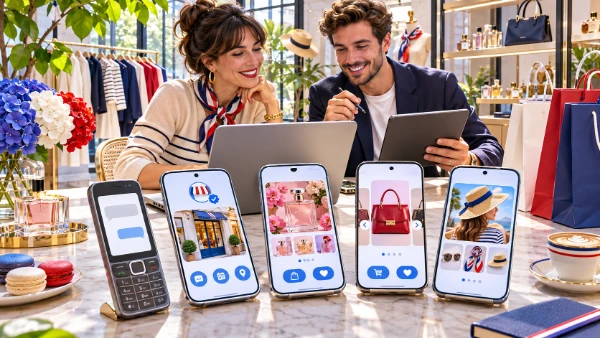
The main difference between RCS and SMS is the amount of information and interaction each message can provide. SMS remains a largely text-based communication channel, conventionally allowing 160 characters in a single message using the GSM-7 character set, with lower limits for messages containing characters that require Unicode encoding. Longer texts may be split into multiple billable segments. RCS supports richer layouts, longer text, media and interactive actions, subject to the capabilities of the receiving device and messaging application. For a straightforward appointment reminder, SMS may be entirely sufficient. For a product launch involving photographs, several options and immediate customer responses, RCS can communicate more information without relying on a sequence of separate text messages.
Coverage is another important distinction. Standard SMS is supported by almost every mobile telephone connected to a compatible cellular network and does not normally require mobile internet access. RCS depends on an active compatible service and an internet connection, so availability is less predictable across a mixed customer database. Businesses often address this limitation by checking RCS reachability before sending and using SMS when richer messaging is unavailable. The fallback must be carefully managed to prevent duplicate delivery and preserve the meaning of the original offer. A message stating only ‘Choose an option below’ works poorly when delivered as SMS without the buttons it originally referred to. A suitable fallback should instead contain the offer details, an understandable link and any necessary opt-out instructions.
Pricing requires individual assessment rather than a simple claim that one channel is always cheaper. Conventional business SMS is commonly charged per message or message segment, with rates depending on the supplier, traffic volume and destination. RCS for Business may use different commercial arrangements, including message-based or conversation-based charging, depending on the provider, message classification and market conditions. Rich media production, business verification, campaign integration and reporting can also contribute to the overall cost. An RCS message may cost more to deliver than a basic SMS while still producing a better commercial result if its interactive content increases completed purchases or reduces customer service work. The relevant comparison is therefore the total cost of achieving a defined outcome, not merely the price of sending one message.
Choosing the Right Messaging Strategy for French Businesses in 2026
A practical approach is to begin with one clearly defined campaign and compare RCS against an appropriate SMS alternative. For example, a French cosmetics retailer could test a personalised product card with an image and shopping button against a conventional text offer containing the same discount and destination link. Both groups should have comparable customer characteristics, valid marketing permissions and similar sending schedules. The business can then assess reachability, delivery costs, clicks, completed orders and revenue rather than relying exclusively on message opens. Where possible, the analysis should also account for customers who would have purchased without receiving either promotion, avoiding exaggerated claims about the additional sales generated by messaging.
Successful implementation also depends on preparing content for different devices and customer circumstances. Advertisers should check how rich cards appear on smaller screens, whether important information remains visible without expanding a card and whether suggested actions lead to functional destinations. French-language campaigns should use natural local wording, display prices in euros where relevant and state material offer conditions clearly. Time-limited promotions need accurate validity dates, while booking messages should identify any important restrictions before customers proceed. Businesses should also test the SMS alternative, verify that unsubscribed recipients are excluded and ensure that customer support teams can respond appropriately when an RCS conversation produces questions rather than an immediate sale.
For French businesses in 2026, RCS is best understood as an additional commercial messaging option rather than a reason to abandon SMS. Its strongest applications are campaigns where images, product choices, verified branding or customer responses make the offer easier to understand and act upon. SMS continues to serve customers whose devices cannot receive business RCS messages and remains useful for concise, widely accessible communications. The most sustainable strategy combines accurate audience selection, legally compliant consent management, reliable fallback arrangements and measurement tied to actual business results. Companies that use richer messaging to provide relevant information and convenient actions, rather than simply sending more advertising, are better positioned to establish lasting customer relationships.